My country Indonesia, rich in culture, rich in natural resources, rich in beautiful places. The various cultures to grow and develop in my country. I love its culture in my country.As good citizens, we should keep our culture in order to remain sustainable and not extinct.One I like is the culture of dance, such as the dance of Bali, the Kecak dance, Pendet, and others.I also like the scene in Bali, because sumuanya still natural. forests are still very green. Blue beaches adorn the island of Bali.Want to know more about the Kecak dance and Pendet?Let me show you:
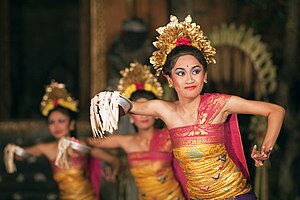
Pendet is a statement of an offering in the form of ritual dance. Unlike dance performances that require intensive training, can Pendet danced by all people, pemangkus men and women, adults and girls.
This dance is taught simply by following the movement and rarely done in the banjo-banjo. The young girl followed the movement of more senior women who understand their responsibilities in providing a good example.
This daughter has a dance movement pattern that is more dynamic than Rejang Dance that was delivered in groups or pairs. Usually displayed after page Rejang Dance at temples and generally facing toward the sacred (pelinggih) by wearing a ceremonial dress, and each dancer brings sangku, jugs, bowls, and other offerings equipment.
2. Kecak Dence

The dancers in the circle is wearing a plaid cloth like a chessboard their waist. Besides the dancers, there are also other dancers who portray the characters of Ramayana as Rama, Shinta, Ravana, Hanuman, and Sugriwa.
Kecak dance songs taken from the ritual dances sanghyang. Also, do not use musical instruments. Only used kincringan worn on the feet of dancers who portray the characters of Ramayana.
Around the 1930's Wayan Limbak worked with German painter Walter Spies to create the Kecak dance based on traditional Sanghyang and parts of the story of Ramayana. Wayan Limbak popularizing this dance while traveling the world with his troupe of Balinese dancers.
source: http://id.wikipedia.org/wiki/Kecak
13 November 2010, my school held a concert Care fighters are held to honor the fighters who had been instrumental to fight for my country's independence.The theme of the show is Bring Culture in this country, his show is very exciting. There are performances from the school band, then there karawitan event, chatting with the veterans, take pictures with the veterans, and the most eagerly awaited is the representative old school mate (old school competition), and my class got a second championship. In this old school competition, each demonstrated class-foam dress old school (the past), and slightly ekting. it was like back to the old school, because they demonstrated that fashion-right bnear jadul. Warrior Care and concert news until the paper. Caring can feel happy Fighters concert at my school.

